For teams shipping AI, MCP, and agents

Security testingfor products that ship AI, MCP, and agents

Appsecco tests core product behavior, connected infrastructure, and AI/MCP attack surfaces together, so the coverage matches the system you actually shipped.

Fixed quote, report reading call, and one revalidation window included.

Trusted by product teams at

Chargebee logo
Anonybit logo
infoblox logo
Atomicwork logo
appknox logo
CloudSEK logo
Mint Software Systems logo
Rippling logo
hiver logo
Accorian logo
Agoda logo
Alaan logo
Chargebee logo
Anonybit logo
infoblox logo
Atomicwork logo
appknox logo
CloudSEK logo
Mint Software Systems logo
Rippling logo
hiver logo
Accorian logo
Agoda logo
Alaan logo
Poshmark logo
mpokket logo
Spenmo logo
East West Seeds logo
e6data logo
Xendit logo
PocketFM logo
Unifyapps logo
Amnic logo
Poshmark logo
mpokket logo
Spenmo logo
East West Seeds logo
e6data logo
Xendit logo
PocketFM logo
Unifyapps logo
Amnic logo

10+

Years in product security

150+

Organizations secured

5,000+

Security vulnerabilities discovered

700+

Security engagements

Our open-source security tools and training materials are used by teams worldwide — including cloud security training (949+ GitHub stars) and the MCP security lab (157+ GitHub stars).

Modern SaaS ships MCP, AI, and agents. Checklist VAPT is not enough.

Traditional VAPT often tests one app, one checklist, or one fixed slice of infrastructure. Modern SaaS spans web apps, APIs, cloud, identity, integrations, and now AI. The risk lives in how those layers connect.

We test those surfaces together, trace how small issues chain into real impact, and give your team evidence-backed findings they can fix without decoding the report first.

Completed assurance vs attack surface now in prod

Completed assurance

What you tested
API Endpoints
Firewalls
Authentication
Input Validation
XSS
CSRF
Pentest: Passed

What buyers assume

The report means the risky paths were tested.

Familiar signal. In AI/MCP-enabled products, it can hide the hardest gaps.

Attack surface map

What the old assurance artifact never had to model once AI, MCP, and connected systems entered the product.

Live now AI / MCP in prod

Auth

Identity

Access

Roles

Memory

Context

Reach

APIs

Data

Retrieval

Integrations

MCP resources

Actions

Tool calls

Execution

Workflows

Reach

Internal systems

The report may show one surface. It does not model how connected systems change access, reach, and action.

AI, MCP, and Agent Security

You passed the VAPT. The new attack surface may never have been tested.

Many SaaS teams did the reasonable thing: they bought the pentest, got the report, and checked the box.

Once AI, MCP, or agents are wired into the product, that old assurance model often stops proving what it looks like it proves.

You can pass checklist or compliance VAPT and still leave the most important AI/MCP attack paths untested.

Follow the gap

Step through where the checklist boundary ends and the connected product surface begins.

Stage 1

Who Can Access

Checklist -> Gap
  • Familiar check

    Authentication, RBAC, and session handling were reviewed.

  • Why buyers trust it

    That feels like access was tested end to end.

  • Where coverage stops

    Checklist VAPT often stops at visible login, token, and role boundaries inside the app.

  • What remains exposed

    It may never test how prompts, shared context, tool calls, or agent permissions create new paths into internal systems.

Stage 2

What Can Be Reached

Checklist -> Gap
  • Familiar check

    Endpoints, inputs, and known integrations were in scope.

  • Why buyers trust it

    That feels like the important data paths were covered.

  • Where coverage stops

    Checklist VAPT rarely maps how retrieval, MCP resources, memory, internal APIs, and connected tools expand what the AI layer can touch.

  • What remains exposed

    The model may still reach tenant data, internal services, or operational systems that were never exercised in the original test.

Stage 3

What Can Be Done

Checklist -> Gap
  • Familiar check

    Critical actions and high-risk workflows were reviewed.

  • Why buyers trust it

    That feels like dangerous behavior would have been caught.

  • Where coverage stops

    Audit-driven testing often checks that actions exist, not whether AI or agent flows can trigger them out of sequence or across trust boundaries.

  • What remains exposed

    An attacker may still be able to invoke tools, chain actions, poison context, or escalate privileges in ways the report never attempted to simulate.

See what Appsecco tests

Our AI security work is grounded in hands-on research and labs because the public guidance is still early, including the Appsecco vulnerable MCP servers lab. View the lab

Testing scope

What Appsecco tests that ordinary VAPT usually misses

Appsecco tests the connected product system: core product behavior, the infrastructure it depends on, and the AI / MCP layer added on top.

Coverage view

Start with the product surfaces every SaaS team recognizes: application behavior, APIs, data boundaries, and authentication.

App

API

DB

Auth

Gateway

Object storage

IAM

MCP

Model API

Agent runtime

Authz / tenancy

Tenant isolation, role boundaries, and the cross-account access paths that let one customer reach another customer's data.

See details

API abuse

Method confusion, under-validated endpoints, hidden routes, and protocol edge cases that turn normal API behavior into attacker leverage.

See details

Workflow logic

Multi-step product flows, state changes, and feature misuse paths that scanners and checklist testing usually flatten into isolated checks.

See details

What You Get

Get the findings, fix guidance, and assurance artifacts your team actually needs.

After the engagement, your team works from clear findings for security, clear fix guidance for developers, and extra documentation when customers, compliance teams, or partners ask for it.

The report is the anchor artifact. When needed, Appsecco also produces evidence packages for internal review, revalidation, and external documentation.

Included in every engagement

The findings, fix guidance, and evidence your team needs.

The report is the working artifact for triage, remediation, and follow-through: the issues that matter, the evidence behind them, and the fix guidance your team needs to act.

  • Security issues your team can prioritize
  • Developer-ready remediation guidance
  • Evidence you can carry into review
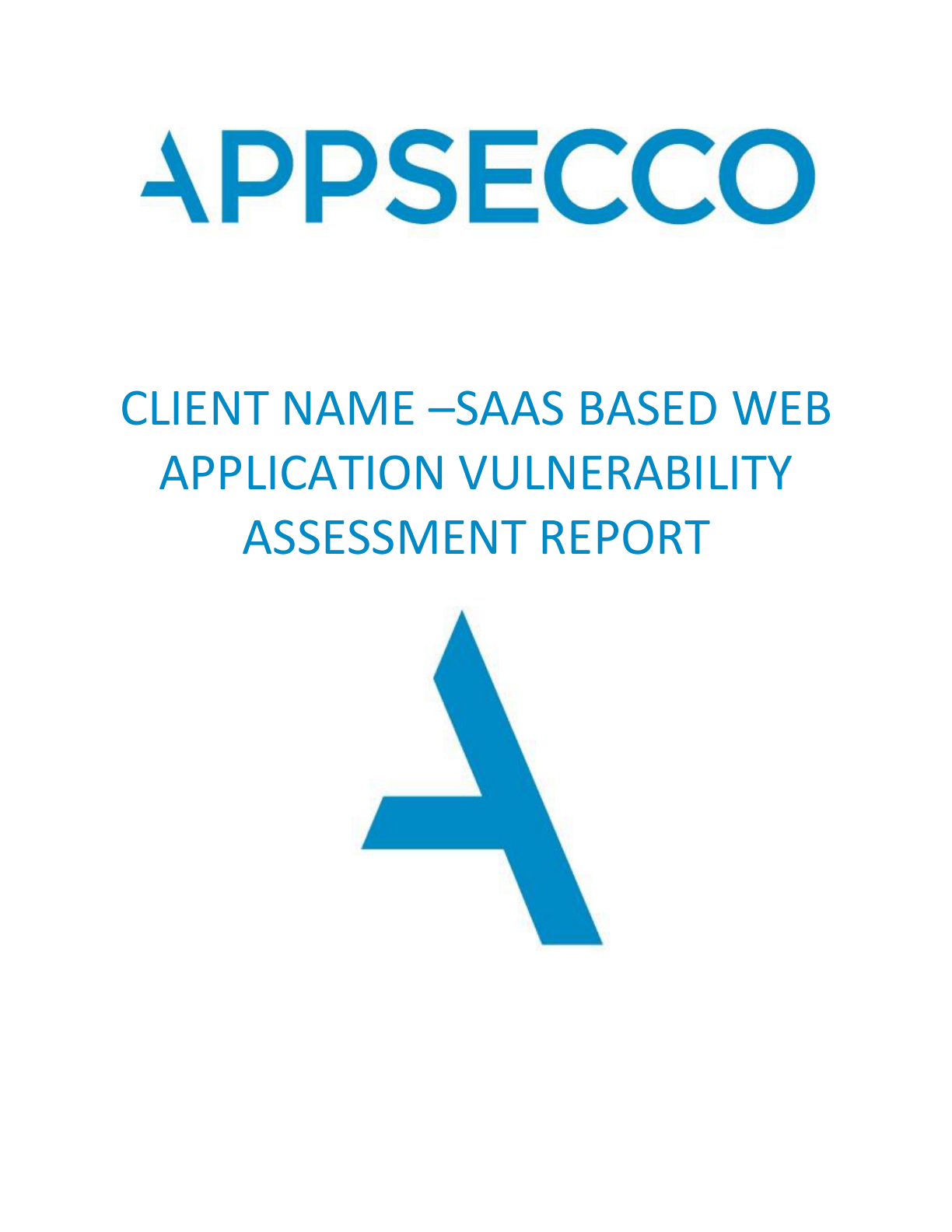
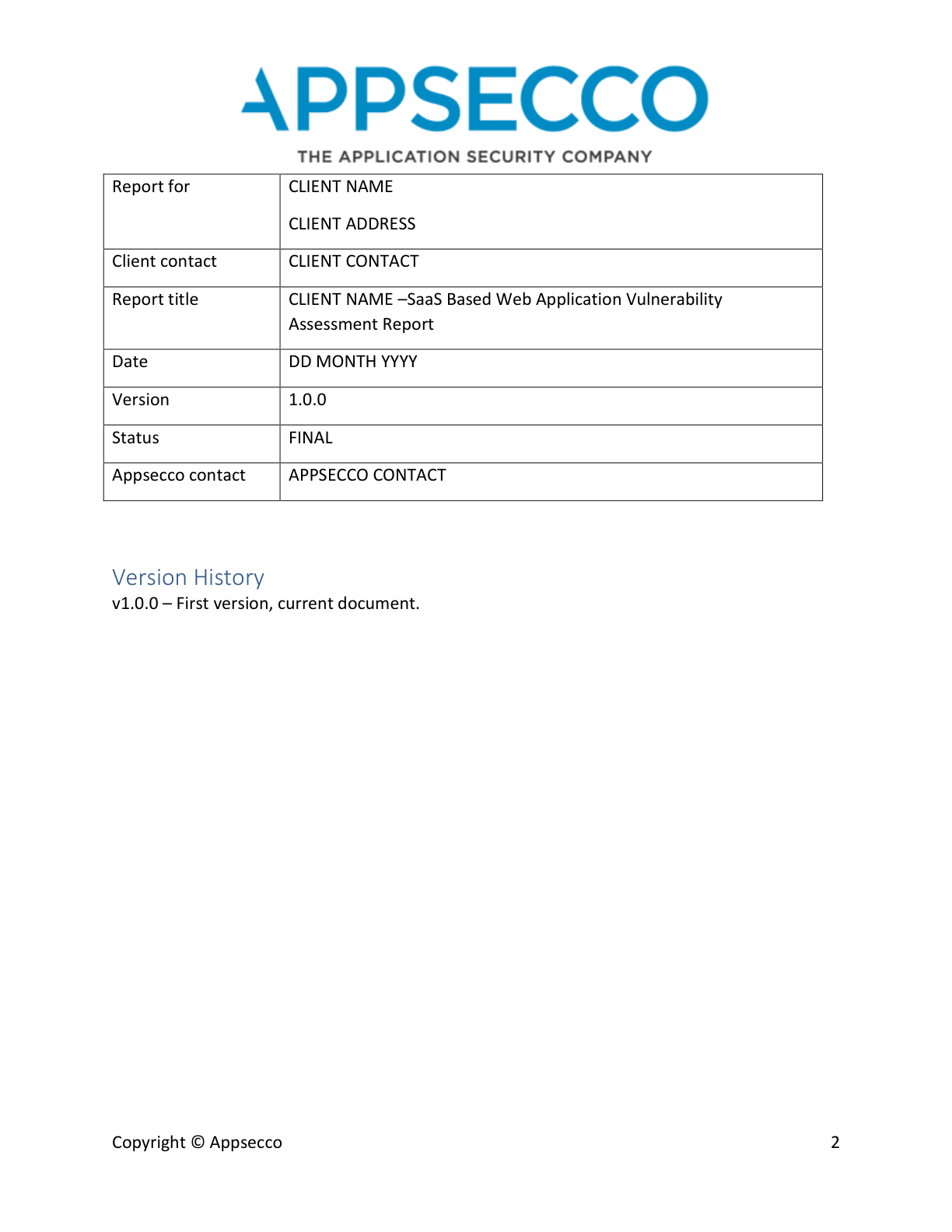
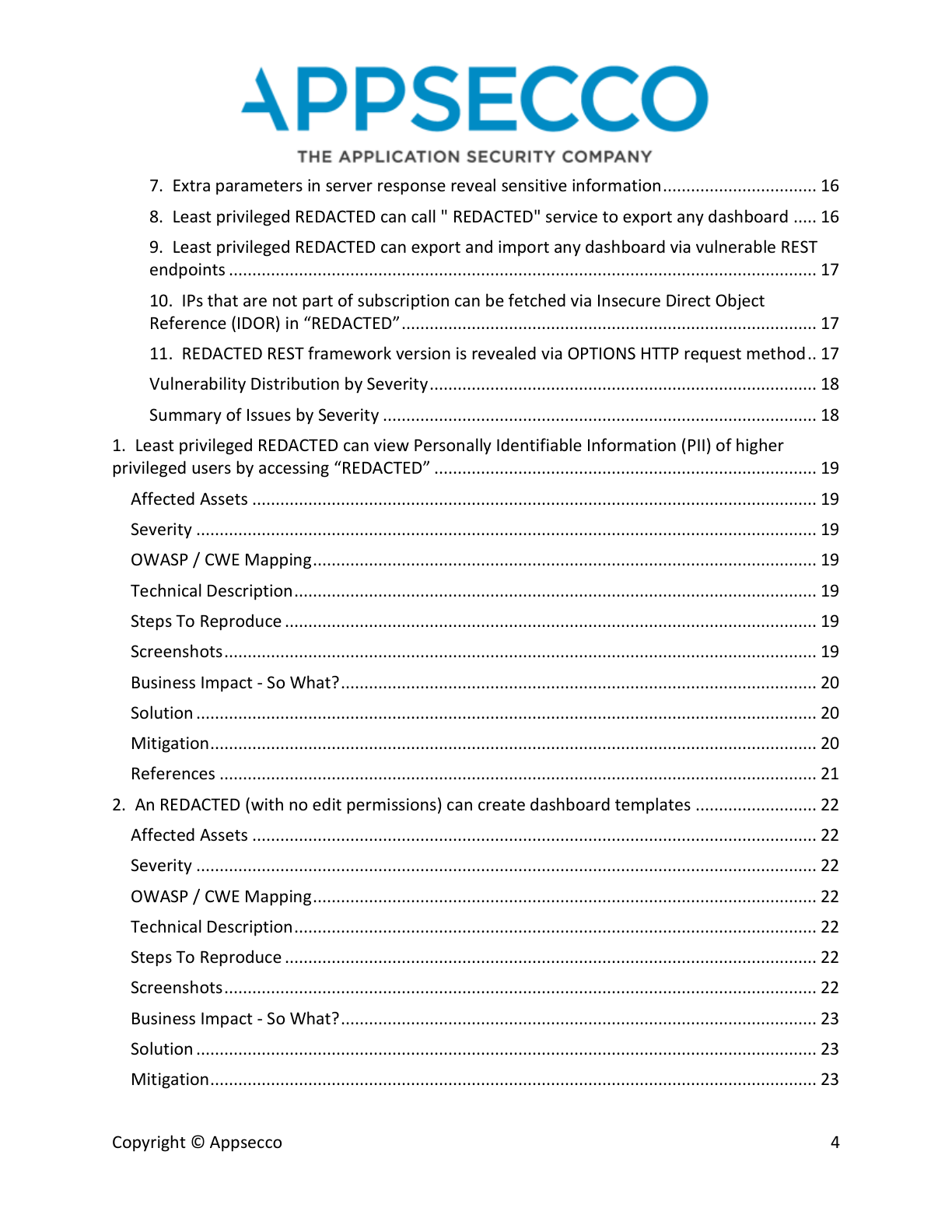
Sample report cover pageSample report table of contentsSample report finding example
Included

Leadership brief

Risk themes · priorities · next actions

Executive summary

Give leadership the risks, decisions, and next actions without sending them through the full technical report.

When needed

Coverage worksheet

Test case · status · notes

Test case sheet

Show reviewers what was exercised so follow-up validation or internal sign-off does not start from scratch.

When needed

Version-bound verification

Verified fixed

Build, date, closure

Verification letter

Confirm a specific version was retested and the agreed fixes were verified for customers, auditors, or partners.

Custom

Submission pack

Requirements mapped

Compliance documentation

Handle regulator, marketplace, procurement, or partner documentation without building the package yourself after the test.

The Process

How an engagement works

A clear process from first call to revalidation. You know the scope, price, delivery date, and what happens after the report.

Step 1

Start with a short hello call, then discovery if needed

We start with a short conversation about the product, your main concerns, and whether a deeper scoping discussion is needed.

What happens

A quick intro call sets context. If the product or environment is more involved, that call rolls naturally into deeper discovery.

What you do

Share the product shape, what matters most right now, and anything already tested.

What we do

Ask the scoping questions that affect coverage, access, timing, and quote accuracy.

What comes next

We turn the conversation into a written scope and fixed quote.

Step 2

Get a written scope, fixed price, and delivery date

Within 48 hours, you get the engagement shape in writing: what we will test, what it costs, and when report delivery happens.

What happens

We convert discovery into a scoped engagement with a fixed quote rather than open-ended hourly work.

What you do

Review the proposed scope and confirm the product surfaces, environment, and timing are right.

What we do

Send the written scope, fixed price, and confirmed report delivery date.

What comes next

Once the scope is agreed, we lock the test window and access plan.

Step 3

Lock the test window and set up access once

Before testing begins, we confirm the dates, point of contact, and the staging or scoped production access we will use.

What happens

The engagement is scheduled and the operational setup is finalized before work starts.

What you do

Provide the agreed access, test accounts, allowlisting, and a responsive contact if we need clarification during the window.

What we do

Confirm the test window, validate access, and make sure the engagement can run cleanly without surprises mid-stream.

What comes next

Once access is ready, testing runs in the agreed window.

Step 4

We test, deliver the report, and invoice after handoff

Testing runs in the agreed window, then your team gets the report, walkthrough, and invoice. Net 7 is the default today.

What happens

We test independently, document findings, prepare the report, and walk your team through the results.

What you do

Stay available for occasional clarifications, then review the report and walkthrough with the right internal stakeholders.

What we do

Run the engagement, deliver the findings and fix guidance, answer questions, and send the invoice after the report is handed over.

What comes next

Your team fixes what matters, then comes back when the changes are ready for revalidation.

Step 5

Come back with fixes and we schedule revalidation

When your team says the fixes are ready, we schedule revalidation and confirm what is closed.

What happens

Revalidation happens after your remediation work, not on an arbitrary date that forces your team to rush.

What you do

Tell us which fixes are ready, share the updated build or environment, and coordinate the retest window.

What we do

Retest the agreed fixes, verify closure, and provide the updated evidence your team needs.

What comes next

You leave with confirmed closure and version-bound proof when the situation calls for it.

No-pressure conversation
Quote in 48 hours
Fixed price, no hourly
Net 7 invoicing by default
Revalidation scheduled when fixes are ready

Pricing

Clear pricing for the systems you actually need tested

Start with core product coverage, add connected infrastructure when needed, or scope AI and MCP on their own.

Fixed quote before work begins
Standalone AI and MCP scopes available
Report reading call + one revalidation window included

Choose the coverage path

Core product

Web, API, auth, authorization, and business flows

For the main product surface, with a baseline cloud exposure review.

From $3,500

Connected infrastructure

Cloud exposure, IAM, Kubernetes, and container surfaces

For deeper connected-system coverage when infrastructure risk is part of the real attack surface.

Custom

AI / MCP layer

AI application security, MCP security, and agent-connected systems

For products that need AI or MCP tested on their own, or as part of a wider engagement.

Custom scope

Included in every engagement

These can be scoped together or independently.

  • Standard security report
  • Fix guidance
  • Report reading call
  • One revalidation window

What Clients Say

Clear findings, no surprises

Teams that build security products trust us to test their own systems because the findings are clear and the process stays predictable.

Infoblox
Appknox
Atomicwork
Accorian

Select customers shown with permission. Additional references available under NDA.

The kind of vulnerabilities they found were things we never expected — things which were not on our radar. That changed how we think about our own attack surface.

Founder & CEO

Asia's leading Threat Intel Company

Found multiple interesting exploitable vulnerabilities across our product. Clear reporting, thorough walkthroughs of each finding, and they stayed engaged until every issue was resolved.

Manager

Most popular Vulnerability Scanner (100+ countries)

We engaged with Appsecco for red teaming. Their findings were specific, well-documented, and gave our team a clear path to remediation.

Senior Expert

European Giant in FinTech

Want to speak with a past client in your industry? We can arrange a reference call under NDA.

When you are ready

A conversation to start.No commitment required.

Tell us about your product and what you are building. We will explain what we would test, answer your questions, and provide a fixed quote if you would like one.

Start a conversation

or view a sample report first

No sales pressure
Fixed pricing, no surprises
You decide the pace